
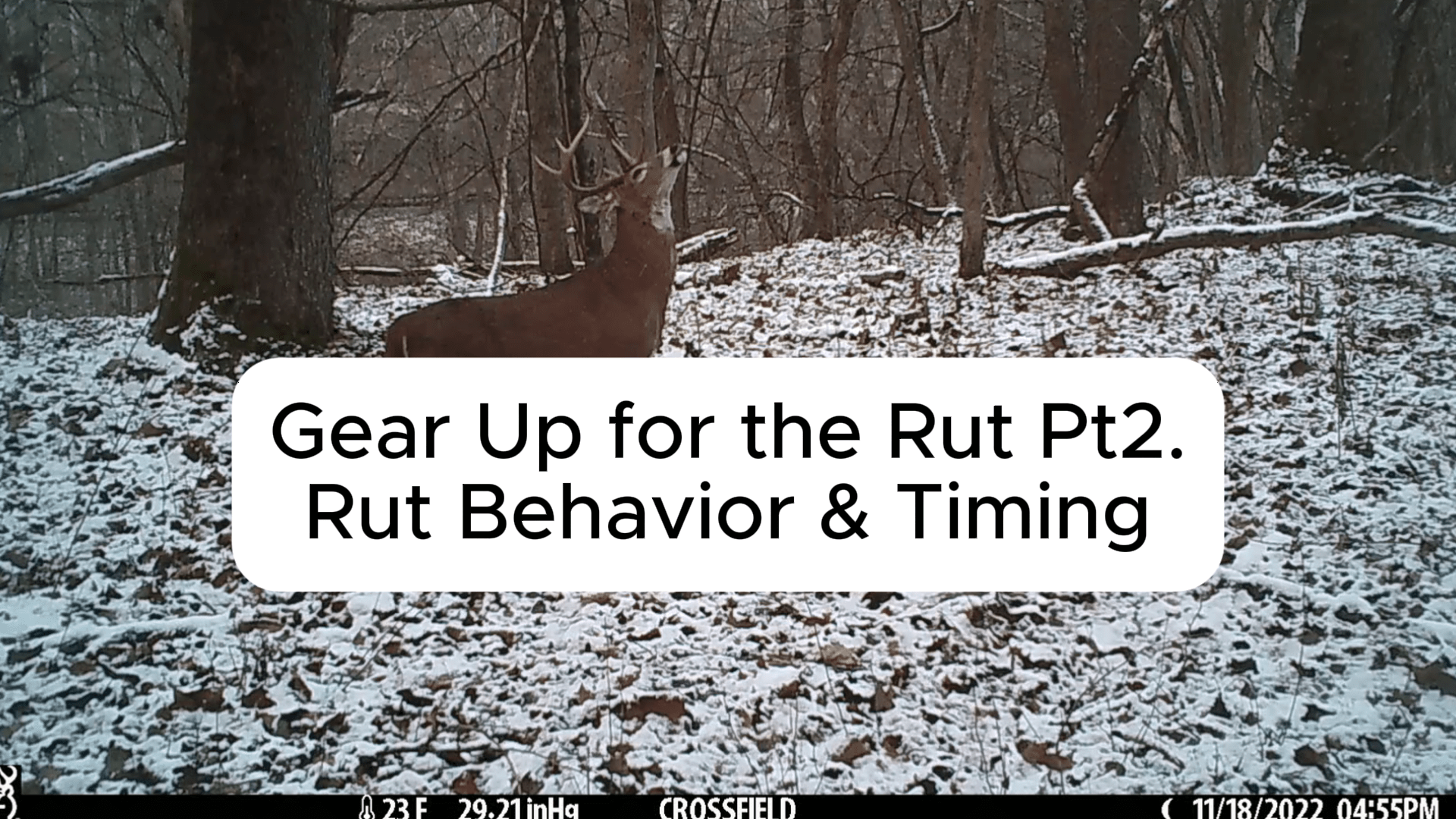

The whitetail rut feels like magic when it’s happening — but nothing about it is random. When you understand rut hunting behavior, every movement, every chase, every scrape and grunt suddenly makes sense. And when you understand it better than the next guy, you stop hunting with hope…and start hunting with intention.
This is Part 2 of my rut series, and we’re diving deep into rut hunting behavior: what bucks actually do, when they do it, and why it matters for your setup. This is where science meets strategy, backed by GPS-collar studies from Wisconsin, Mississippi, and Penn State that reveal exactly how bucks move during each rut phase.
Whitetail Rut Phases: The Rhythms Behind Rut Hunting Behavior
The rut isn’t one giant event. It’s a progression — a series of biological and behavioral shifts that build toward peak conception and then fade away. If you don’t understand the whitetail rut phases, you’ll always feel one step behind the deer.
Bucks move differently in every phase. They show different tendencies, burn daylight differently, respond to calls differently, and choose bedding differently. That means your rut hunting behavior strategy must evolve too.
Let’s break down each phase, how bucks behave, and how you can capitalize.
Pre-Rut: Early Signals That Kickstart Rut Hunting Behavior
What the Science Says
Twenty to thirty days before peak conception, rut hunting behavior begins to show itself quietly. Bucks start expanding travel routes, rubbing more frequently, and checking field edges and transition zones with increasing consistency.
GPS-collar studies from Wisconsin show clear increases in daily movement compared to early October — subtle, but measurable. Bachelor groups dissolve. Bucks start showing up in cameras where they haven’t appeared in weeks. It’s the warm-up lap before the storm.

How to Hunt It
- Hunt transition corridors between bedding and food.
- Use field-edge scrapes as low-impact intel hubs.
- Keep pressure low — pre-rut deer are sensitive to intrusion.
You’re not swinging for the fence yet. You’re gathering data and preparing for the shift.
Rut Timing for Deer Hunters: The Seeking Phase
Ten to twenty days before peak conception, rut hunting behavior spikes. Scrapes multiply. Bucks check bedding more aggressively. Daylight appearances jump.
This is the phase most hunters underestimate — and it’s where patterns still exist if you’re paying attention.
Behavior Breakdown
- Young bucks travel the most during this phase.
- Older bucks expand ranges only slightly — but strategically.
- Scrapes become the communication center of the woods.

How to Hunt It
- Put cameras on community scrapes in video mode.
- Hang stands near downwind edges of doe bedding.
- Watch for daylight cameos that signal escalation.
This phase is your opportunity to map out who’s in the area before chaos hits.
Buck Movement During the Rut: The Chasing Phase
Three to ten days before peak breeding, rut hunting behavior hits its climax. Bucks travel two to three times farther per day. GPS studies confirm the chasing phase as the highest movement period in the entire season.
This is the stage where everything feels unhinged — bucks running does, does kicking out fawns, and deer showing up in places they haven’t visited all year.

How to Hunt It
- Stay all day — bucks move nonstop.
- Hunt pinch points between doe bedding areas.
- Use calling, rattling, and decoys sparingly but confidently.
- Focus on winds crossing doe bedding at an angle.
This is the best week of the season to kill your target buck.
Lockdown: The Dark Side of Rut Hunting Behavior
This is where morale goes to die. Bucks lock down with does for 24–36 hours at a time, movement drops 60–70%, and hunters swear deer “disappear.”
They don’t. Their rut hunting behavior just shifts to tight cover.
Where Bucks Hide
- Clearcuts and regen thickets
- Creek ditches and river bottoms
- Overlooked edges behind parking areas
- CRP pockets with wind advantage
These spots act as rut “maternity wards.” Bucks push does into security and stay glued to them until the next receptive doe shows up.
How to Hunt It
- Midday still-hunts or quiet slips along downwind edges.
- Targets travel corridors between isolation cover pockets.
- Stay mobile — a buck may break free at any moment.
Post-Rut: Final Opportunities as Rut Hunting Behavior Winds Down
Five to twenty days after peak conception, rut hunting behavior transitions from chaos to survival mode. Bucks are depleted — often losing 20–25% of body weight — and they shift to high-calorie feeding patterns again.
Your advantage? They’re predictable again.
High-Value Post-Rut Setups
- Green winter wheat fields near bedding
- Late-season clover and brassica plots
- Oak flats still holding acorns
- South-facing bedding slopes with thermal advantage

It’s not glamorous, but these setups kill a shocking number of late-season bucks.
Final Thoughts: Master Rut Hunting Behavior, Master the Rut
If you take anything from this, take this: rut hunting behavior isn’t random. Bucks don’t wander like drunk idiots. They move with purpose. They follow patterns driven by biology, competition, and pressure.
Once you understand that rhythm — pre-rut, seeking, chasing, lockdown, post-rut — you stop gambling and start predicting.
You don’t need luck. You need intention. You need discipline. You need to hunt when everyone else is sleeping, or scrolling, or sitting in the wrong damn tree because “that’s where Grandpa always hunted.”
The deer aren’t your enemy. Confusion is. Understanding rut hunting behavior is the cure.
Scientific Sources & Studies Referenced
The rut behavior and movement data referenced in this article comes from peer-reviewed or university-backed GPS-collar research projects. Explore the full studies below:
-
Southwest Wisconsin Deer & Predator Study (WI DNR)
Multi-year GPS-collar project analyzing buck movement, rut ranges, and breeding ecology.
https://dnr.wisconsin.gov/topic/research/projects/deer -
MSU Deer Lab (Mississippi State University)
Research on rut movement spikes, chase-phase activity, and home-range expansion during breeding.
https://www.msudeerlab.com/ -
Penn State Deer-Forest Study
Analysis of lockdown behavior, 24–36 hour tending cycles, and post-rut movement decline.
https://www.deer.psu.edu/ -
Hunsaker et al., 2023 — Movement Ecology of Male White-Tailed Deer
Age-specific movement patterns showing 2-year-olds as the most mobile age class during the rut.
https://doi.org/10.1002/ece3.10037 -
MSU Deer Lab — “When Bucks Move Most” GPS Series
Breakdown of daylight behavior, peak rut travel, and buck excursions outside core areas.
https://www.msudeerlab.com/buck-movement
These studies are the backbone of the behavioral timelines and tactical recommendations used throughout this rut hunting series.

Leave a Reply