

Ultimate Guide to Deer Food Plots Design: Shapes, Layouts & Hunting Strategy
Now that we have a seed or blend in mind, it’s time to move into the next stage of planning — the deer food plots design. Your objectives should lead this decision. Is this plot meant to feed deer, or is it a strategic hunting location? Is it part of a warm-season planting or a fall kill plot? Each of these factors plays a key role in how you design your food plot layout.
🌿 Warm Season Food Plots Design (Supplemental Feeding)
- Plot Size: 1–5 acres
- Purpose: Nutrition and herd health during spring/summer
- Design: Layout isn’t critical; focus on accessibility and reaching acreage goals
- Timing: Spring planting
- Bonus: Can be tilled under or converted into fall plots
🌾 Cool Season Food Plots Design (Hunting Attraction)
- Plot Size: 0.25–1 acre
- Purpose: Designed as hunting “kill plots” to concentrate movement
- Design: Use the best food plot shapes for deer that limit long sight lines and create curiosity
- Timing: Late summer to fall planting
- Bonus: Grains and brassicas extend food availability into winter
🗺️ Best Food Plot Shapes for Deer
For hunting-focused kill plots, the layout is everything. The right deer food plot design creates curiosity, movement, and better shot opportunities. Bucks — especially during the rut — are drawn to blind corners and unseen pockets. Strategic plot shapes capitalize on that behavior and funnel deer naturally into shooting lanes.
T Plot Design
Great for ridge tops. The top of the T runs downhill; the stem runs along the ridge. Ideal for areas where you want to hunt multiple winds.

Y Plot Design
Similar to a T plot but perfect for split terrain or tighter timber. Offers varied sightlines and more flexible stand options.

L and J Plot Designs
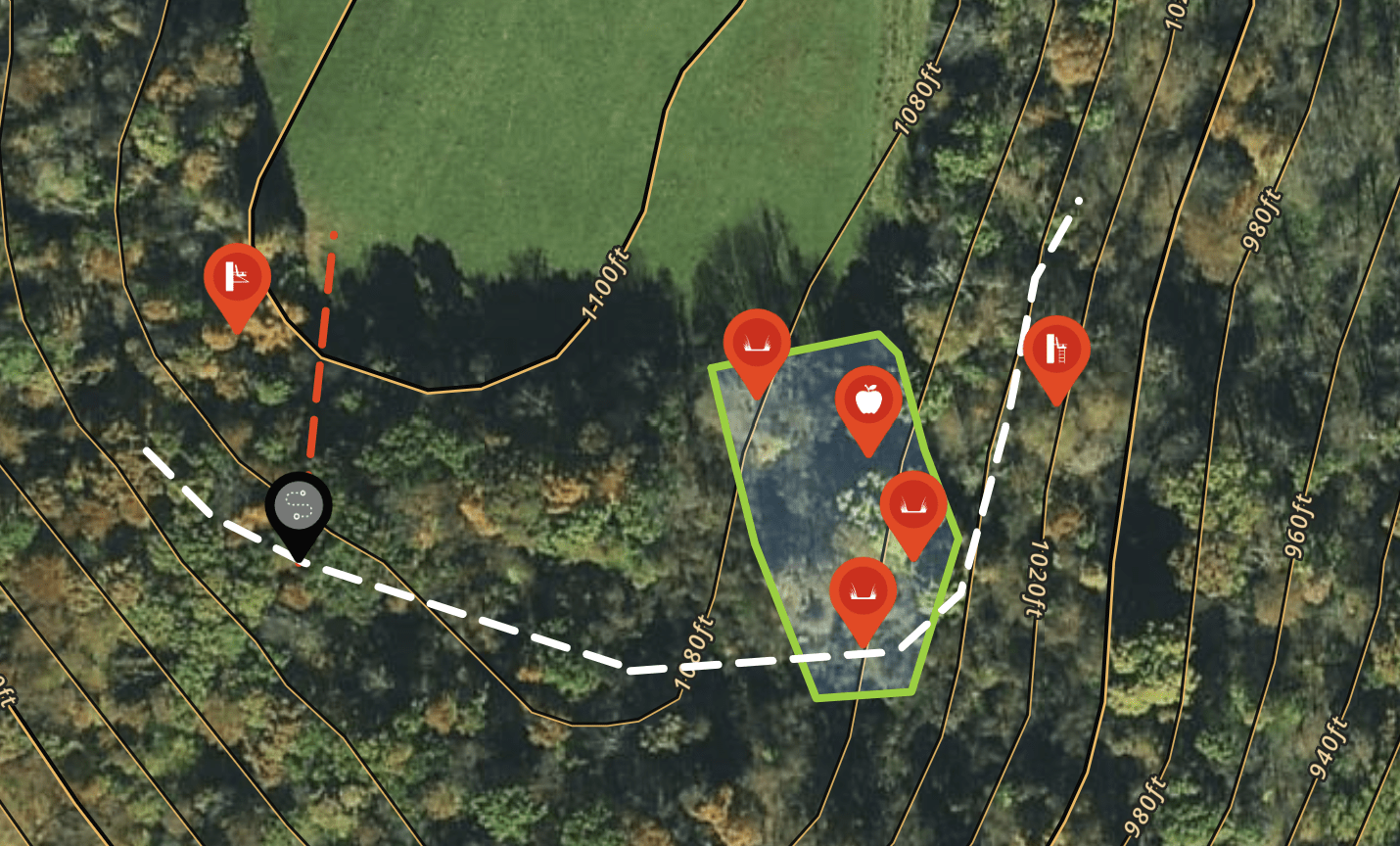
L plots and J plots are great when terrain limits your options. The outside corner usually provides the best stand site. A deer food plot design like this creates a natural pinch point and defined entry for deer movement.

K, V, U, and Hourglass Designs
These are among the best food plot shapes for deer because they build curiosity and natural funneling. Deer will travel through the center of these shapes to investigate, often within range of a well-placed stand.


📊 How to Layout a Deer Food Plot for Wind and Access
Even the best deer food plots design fails if it’s set up wrong for your prevailing wind. Plan your access routes so you can enter and exit without spooking deer. Use natural cover, edge vegetation, or screen plantings to conceal movement. Always verify that your stand location aligns with your most common wind direction — not the rare one you “hope” for.
Common Food Plot Design Mistakes
Overexposing the plot, ignoring terrain lines, or placing stands in the open can ruin great potential. Keep human scent out, minimize visibility from deer trails, and always design plots to encourage movement — not loafing.
Final Thoughts on Deer Food Plots Design
Effective deer food plot designs blends biology with strategy. Match your shape, timing, seed blend, and access plan — and you’ll create a plot that not only feeds deer but positions you for the perfect shot. For next steps, read our Soil Sampling & Preparation Guide to ensure your design starts on solid ground.

Leave a Reply